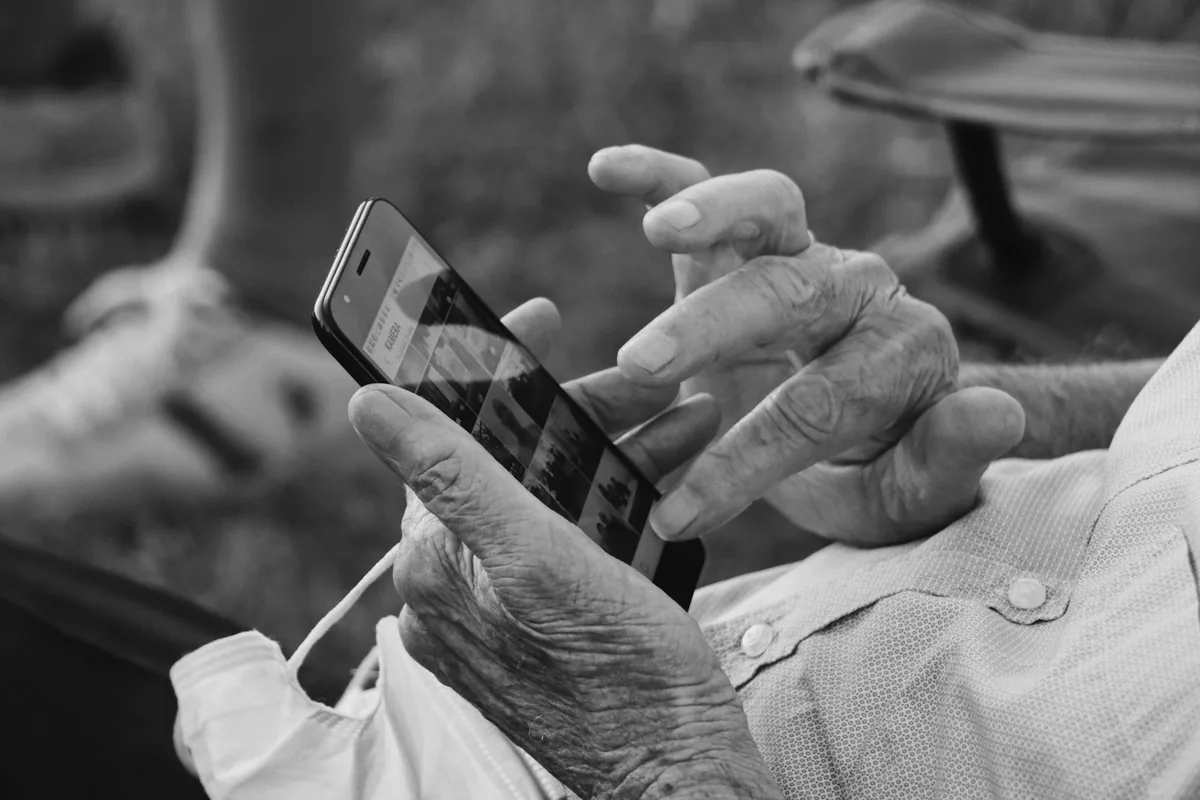
Your mom gets a text. It shows your niece, tear-streaked and holding a handwritten sign that says she's stranded overseas and needs $2,000 wired tonight. The photo looks completely real. It isn't, and no amount of squinting would have told her otherwise. That is the quiet danger of AI scam photos, and this guide is for anyone who wants to protect an older relative from them.
Why AI Scam Photos Target Older Relatives First
Older adults get targeted first because they hold the most savings and grew up trusting that a photograph was proof of something. Scammers know both facts. Put a convincing fake image in front of someone who has never had a reason to doubt a photo, add a ticking clock, and you have a formula that works far too often.
The numbers back this up. In 2025, Americans 60 and older reported $7.7 billion in fraud losses to the FBI's Internet Crime Complaint Center, a 59 percent jump from the year before, with the average victim in that age group losing more than $38,000. AI is a growing slice of that total, and it happens to be the slice growing fastest.
For a generation raised on "pics or it didn't happen," the hardest thing to accept about 2026 is that now the pic can lie too.
The Five Fake Photos Most Likely to Reach Your Parents
Most AI scam photos aimed at older adults fall into five buckets. If your relative can recognize these on sight, they're already ahead of most victims. Here's what each one looks like in the wild.
The fake sweetheart. Romance and confidence scams cost older Americans $584 million in 2025, and they almost always start with a face. A scammer spins up a warm, attractive, slightly-too-perfect profile photo of a "widowed engineer" or "deployed soldier," then builds weeks of affection before the money problem appears. The person in the photo does not exist.
The distressed family member. This is the one that guts people. A scammer sends a photo or short clip of a grandchild who looks hurt, arrested, or stranded, paired with a panicked message and a plea for secrecy, and cloned voices push it further on the phone. The FBI tied more than $5 million in losses to these distress scams in a single year.
The celebrity or official endorsement. Your dad sees a photo of a trusted news anchor or a famous investor promoting a "guaranteed" crypto platform or a government benefit check. It's a fake image on a fake ad, designed to make a scam look sanctioned. These fake endorsements have shown up by the thousands across Facebook and Instagram.
The proof-of-legitimacy document. Fake medical bills, lab results, telehealth sites with invented doctor photos, official-looking letters from "Medicare" or "Social Security." AI can now generate all of it in seconds to prop up whatever story the scammer is telling.
The too-good-to-be-true product or prize. A stunning product photo at an impossible price, or a "you've won" image with a logo that looks almost right. The picture does the convincing so the fine print doesn't have to.
The Red Flags Still Hiding in a Convincing Fake
Even the best AI images still slip up in predictable places. The trick is knowing exactly where to look, then zooming in to 100 percent or more instead of glancing at a thumbnail. Here are the tells that still work in 2026.
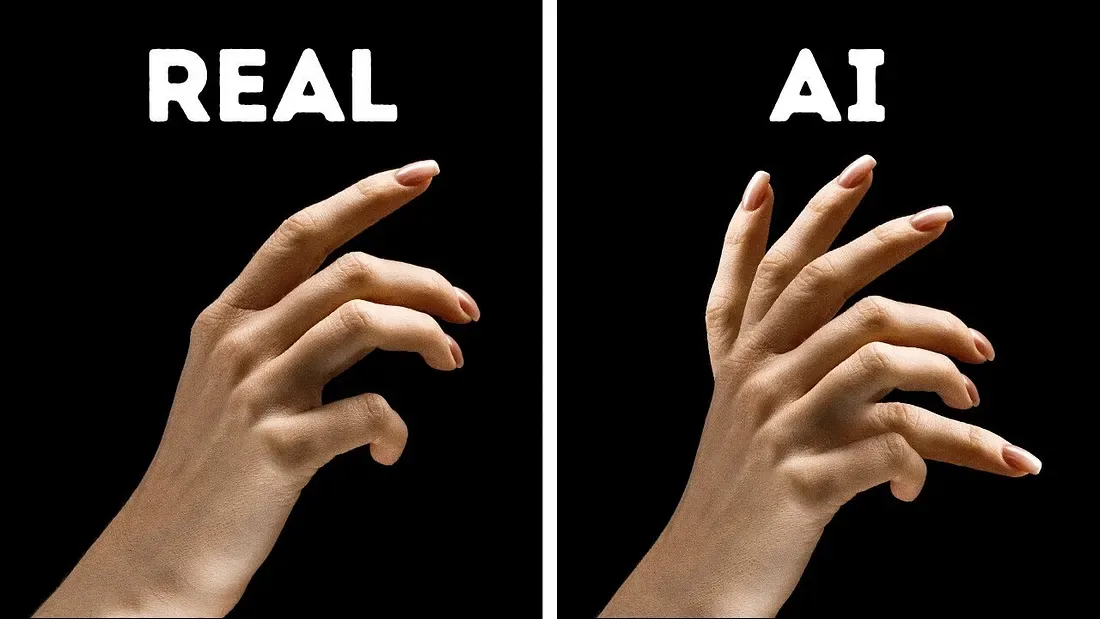
Start with the extremities. Hands remain AI's weak spot, so count the fingers, check for fused or wrong-bending joints, and look at how a hand grips an object. Teeth are the next giveaway, often too many, too uniform, or slightly melted together. Ears come out asymmetric or oddly shaped, and if the person wears glasses, the reflections in the two lenses often fail to match the scene or each other.
Then check the physics. Shadows should fall in one consistent direction, and a reflection in a mirror or window should match what's in front of it. Look at where feet meet the floor, since AI figures sometimes seem to float rather than stand with weight. Jewelry, straps, or patterns that melt into skin are a strong sign, and so is hair that blends unnaturally into the background.
Finally, read the text and the background. Words on signs, menus, or labels tend to come out garbled or half-melted, because the model does not actually spell. Backgrounds warp, repeat, or clone stray people in the distance. Skin that looks a little too waxy, lighting that feels like a movie poster on a supposedly casual snapshot, a vacant stare: any single one of these can fail on its own, so the smart move is to stack the checks rather than trust just one.
Teach Them a Ten-Second Photo Gut Check
The most useful thing you can give an older relative is not a list of 20 red flags. It's one short routine they'll actually remember when a scary photo lands. In my experience helping people through this, a memorable three-step reflex beats an exhaustive checklist every time.
Here's the reflex in plain terms. One: stop and notice the feeling, because almost every scam photo is built to trigger panic, excitement, or romance and to make you rush, and the rush itself is the warning. Two: ask "would this person really be here, doing this?" A grandchild who never travels, suddenly stranded in another country, is a story worth doubting. Three: do not act on the photo alone, meaning no wiring, no gift cards, no clicking, until it's confirmed another way.
Say it back to them as a sentence they can keep: "If a photo makes me want to hurry and send money, that's exactly when I slow down." Write it on a sticky note by the computer if that helps. Corny works, because corny gets remembered.
When Your Eyes Aren't Enough, Check the File Itself
When a photo passes the eye test but something still feels off, stop trusting your eyes and start checking the file. Two free moves catch a huge share of fakes: a reverse image search and an error-level analysis. Neither one requires any technical skill.
Reverse image search comes first. Save the photo, then drop it into Google Lens or TinEye. If that "new sweetheart" photo turns up on a stock site or across a dozen unrelated profiles, you have your answer in seconds, because scammers rarely use one-of-a-kind images.
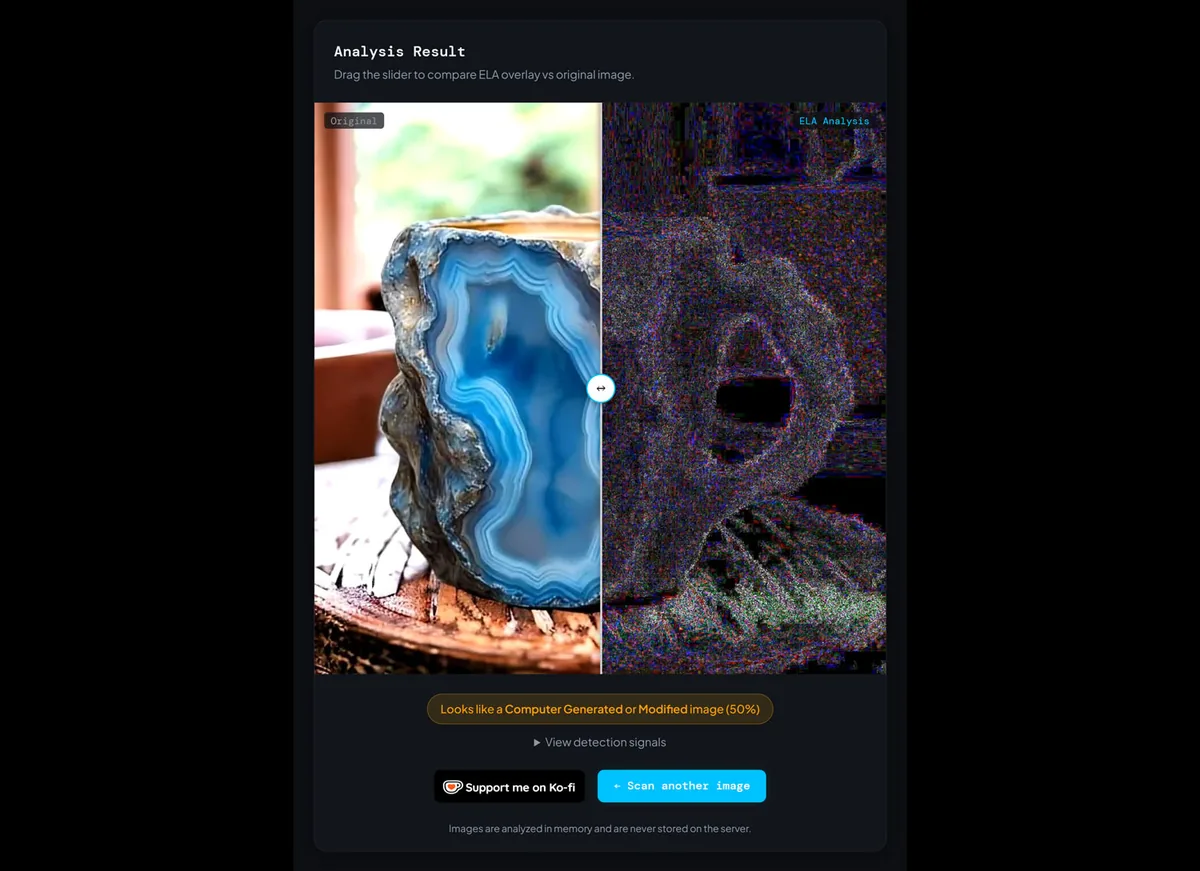
Next, look inside the file. Real photos from a phone or camera carry metadata: the device, the date, sometimes the location. Many AI-generated and heavily edited images have that data stripped or missing, which is a quiet red flag on its own. You can right-click a saved image and open Properties or Get Info to peek, or let a tool read it for you.
This is where a dedicated checker earns its keep. Upload a suspicious JPG to a free image forensics tool and it runs Error Level Analysis, which exposes edited or generated areas by revealing differences in compression, and it reads the metadata in the same pass. If you or your relative ever hesitate over an image, run it through our free detector at fakeimagedetector.com before anyone makes a decision. It takes seconds and costs nothing.
The One Habit That Beats Every Fake Photo
If your relative remembers nothing else, it should be this: verify on a number you already have. No matter how real a photo looks or how urgent the message sounds, the fake falls apart the moment you reach the real person through a channel you already trust.
Say the "police" send a photo of your grandson in custody. Hang up, then call your grandson's actual phone, or his mother, using the number already saved in the contacts. Never call the number the message gives you, and never keep going in the same chat thread. A real emergency survives a five-minute callback, which is exactly why scammers beg you not to hang up or tell anyone.
A real emergency survives a five-minute callback on a number you already had. A scam almost never does.
How to Talk About This Without Scaring Anyone
The way you raise this matters as much as the facts. Lead with fear or treat your parent like they can't cope, and they'll tune out or quietly hide the next suspicious message from you, which is the opposite of what you want. Come in as a teammate, not a supervisor.
A few things work better than a lecture. Frame it as something happening to everyone, not a comment on their judgment: "These fakes are fooling really sharp people, so we should have a plan." Make it two-way by asking them to help you catch fakes too. Set up the safe word and the callback rule together, as a family system rather than a rule you're imposing, and leave the door open so a relative can forward you a weird photo and ask "is this real?" without a shred of embarrassment.
A mistake I see constantly is the one-and-done talk. You explain deepfakes once, feel relieved, and move on. But the tactics shift every few months, so a two-minute check-in now and then does more than a single dramatic warning. Keep it light, and keep it going.
A family friend shared what looked like a photo of a lost child on social media. Before reposting it, they asked me to check it. The clothing blended unnaturally into the skin, parts of the background looked warped, and we couldn't find any matching police or news reports. It turned out to be an AI-generated image designed to attract shares.
What to Do the Hour You Suspect a Scam
If you think a relative already acted on a fake, move fast, because the first hour matters most for stopping or clawing back a transfer. Speed and calm beat panic and blame here.
Take these steps in order. Call their bank or the payment service immediately and ask them to stop or reverse the transaction. Wires and gift cards are hard to recover, but it's not always impossible if you act quickly. Save everything: the photos, messages, phone numbers, and any receipts. Report it to the authorities, who both track these scams and can point you to the next steps. Then, gently remind your relative that this happens to smart people and that reporting it is the responsible thing to do, not something to hide.
Blame is the enemy in that moment. Shame is exactly what keeps victims quiet and lets a scam run longer, so the kindest and most effective response is matter-of-fact support. Fix what you can, report it, and move forward together.
FAQ
Can you still tell if a photo is AI-generated in 2026?
What's the fastest way to protect an older parent right now?
Are AI scam photos really aimed at older people specifically?
My relative already sent money. Is it gone?
Wrapping Up: Start With One Conversation
You don't need to turn your parents into forensics experts. You need one honest conversation and two simple habits: a family safe word, and a rule to verify every urgent photo by calling back on a known number. Set those up this week and you've already closed the door most scammers walk through.
Here's your one next step. Pick the relative you worry about most, send them this post or just call them, and agree on your safe word today. Then bookmark a free image checker together so it's ready the moment a questionable photo shows up. If a suspicious image ever lands, upload it to our detector at fakeimagedetector.com and let Error Level Analysis and metadata do the doubting for you. The fakes get better every month, but a family that verifies never has to keep up with them.